

Last week, I found myself spending an hour working on something that wasn’t pizza.
I was redesigning a Google Form.
Not exactly the glamorous side of entrepreneurship.
The form is the one prospective catering clients fill out when they contact Serpico’s Bread Co. about an event. Like most inquiry forms, it asked all the usual questions: date, location, guest count, type of event, and contact information.
Then I realized something.
The form was helping people request quotes.
What it wasn’t doing was helping people determine whether we were a good fit.
Those are two very different things.
The Trap Most Small Business Owners Fall Into
When you’re first starting a business, every inquiry feels like an opportunity.
You answer every email.
You take every phone call.
You write every proposal.
You chase every lead.
I certainly did.
In the early days, saying “no” felt irresponsible. Every customer represented potential revenue, and revenue was survival.
But as a business grows, something changes.
You begin to realize that not every customer is your customer.
In fact, some customers cost more than they’re worth.
Not because they’re bad people.
Not because they’re difficult.
Because they’re looking for something completely different than what you offer.
The Wrong Customers Aren’t Wrong
One of the biggest mistakes business owners make is assuming that every prospect who doesn’t buy simply doesn’t understand the value.
Sometimes they understand perfectly.
They just want something else.
In my business, I regularly encounter people looking for the lowest-cost pizza catering option available.
There is absolutely nothing wrong with that.
If your goal is feeding a crowd for the lowest possible cost, there are plenty of excellent operators who can help.
But Serpico’s Bread Co. was never built around being the cheapest option.
We make handcrafted doughs.
We ferment them for days.
We prepare food on-site.
We interact with guests.
We explain the history behind regional pizza styles.
What we offer is closer to a culinary experience than traditional catering.
That doesn’t make it better.
It makes it different.
Stop Convincing. Start Qualifying.
While reworking the form, I found myself thinking about something former FBI hostage negotiator Chris Voss often discusses.
The best negotiators don’t hide objections.
They surface them early.
Most businesses spend their time trying to convince prospects to buy.
What if we spent more time helping prospects determine whether they’re a fit?
Instead of asking:
“How many guests are attending?”
I added a new question:
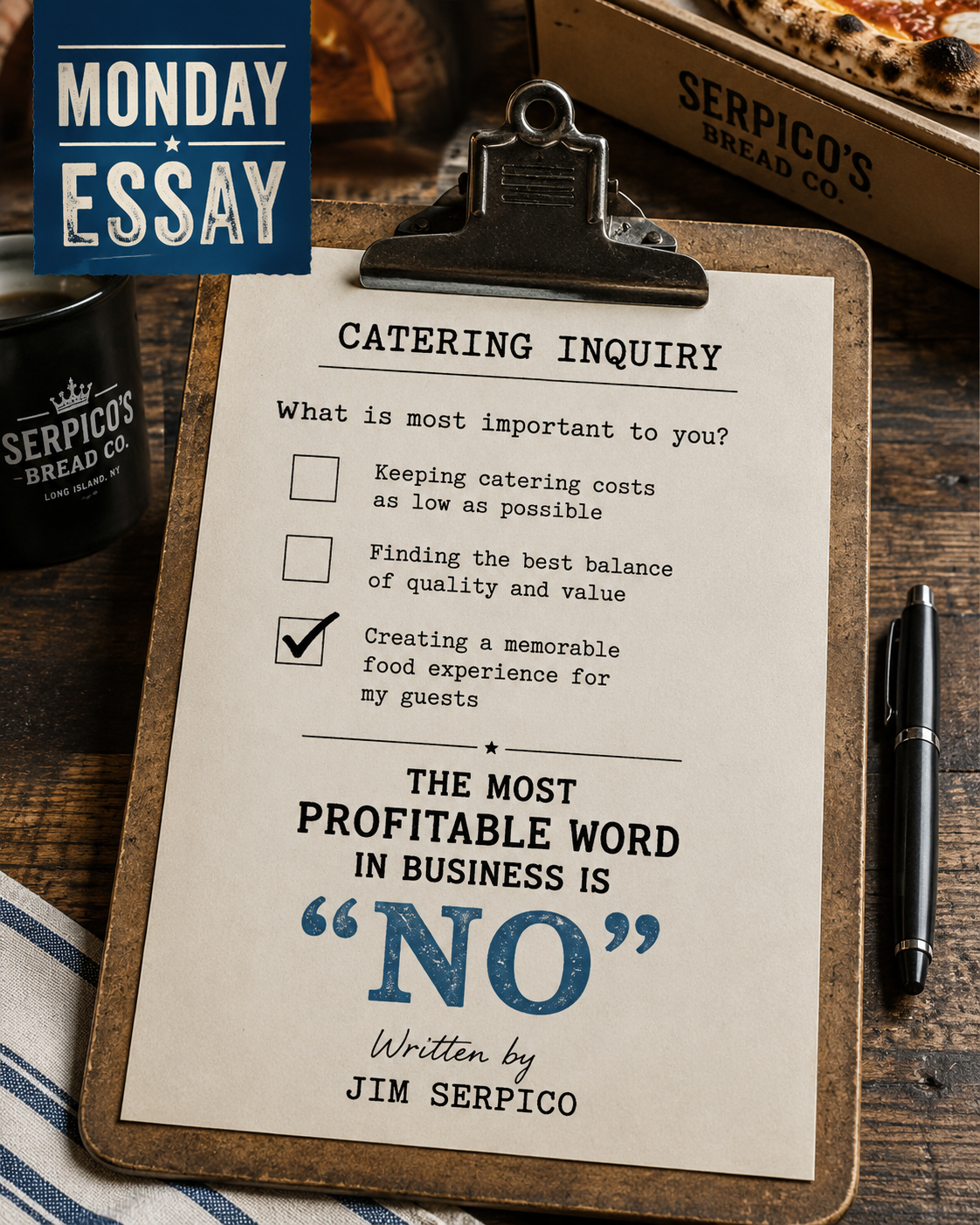
“What is most important to you?”
- Keeping catering costs as low as possible
- Finding the best balance of quality and value
- Creating a memorable food experience for my guests
That single question tells me more than guest count ever could.
Because before we discuss menus, pricing, logistics, ovens, generators, or dough, we should first determine whether we’re trying to accomplish the same thing.
The Power of Self-Selection
Luxury brands understand something that many small businesses forget.
Not every customer belongs in every business.
A five-star hotel doesn’t apologize for its rates.
A fine dining restaurant doesn’t justify every menu item.
A premium service doesn’t spend its time arguing with customers who want something different.
Instead, they clearly communicate what they do and allow customers to decide whether it aligns with their goals.
The most successful businesses don’t build bigger funnels.
They build better filters.
The purpose of a filter isn’t to exclude people.
It’s to direct people toward the option that’s right for them.
Why “No” Is So Profitable
At first glance, turning away potential customers seems like a terrible business strategy.
But every business has limited resources.
Limited time.
Limited energy.
Limited attention.
Every hour spent pursuing the wrong customer is an hour not spent serving the right one.
Every proposal written for someone who only cares about price is time that could have been invested in a customer who values craftsmanship, experience, and hospitality.
The irony is that the clearer you become about who you’re not for, the more attractive you become to the people who are.
Customers don’t want businesses that try to be everything.
They want businesses that know exactly who they are.
The Most Profitable Word in Business
The word isn’t “yes.”
The word isn’t “growth.”
The word isn’t even “sales.”
The most profitable word in business might be “no.”
Not because you enjoy turning people away.
Not because you think you’re better than anyone else.
Because every thoughtful “no” protects your ability to deliver an exceptional “yes” to the right customer.
And sometimes the most profitable thing a business owner can do is make it easier for the wrong customer to walk away.
If this resonates with you, I publish essays like this every Monday morning. If you’d like them in your inbox, you can sign up here.