


People like to tell reinvention stories as if they’re acts of courage.
As if one morning you wake up, stretch, look out the window, and boldly decide to become someone else.
That wasn’t my story.
I didn’t leave television.
Television didn’t reject me in some clean, dramatic way either.

It loosened its grip slowly. Quietly. Almost politely.
The calls came less often.
Meetings grew vague.
Projects lived in “development” long enough to start feeling theoretical.
At first, I told myself this was temporary. That this was just how the business worked. Because that’s what everyone says when the ground starts shifting under your feet.
“You’re still in it.”
“This happens to everyone.”
“Something will come together.”
But eventually, you notice the truth before you’re ready to say it out loud.
You’re no longer being chosen.
That realization carries a specific kind of shame. Not the loud kind. The quiet, internal kind. The kind that makes you rehearse your past accomplishments to yourself just to make sure they were real.
I had spent years in a world where identity and work are dangerously intertwined. When someone asks what you do and you say television producer, it carries weight. Status. Context. A shorthand for having “made it.”
So when that title starts to dissolve, you don’t just lose work.
You lose language.
I didn’t pivot because I was brave.
I pivoted because staying put felt dishonest.
For a while, I didn’t call it reinvention at all. I called it “taking a break.” Or “trying something on the side.” Or “just seeing where this goes.”
The clearest signal that this chapter was ending didn’t come from television itself.
It came from a client.
A comedian I managed toward the end of that period. Talented. Working. Hovering in that uncomfortable middle space where success feels close enough to taste but never close enough to relax.
When he let me go, he was kind about it. Careful. Measured.
He said I was “a little too passive.”
At the time, that stung. Not because it was cruel, but because it was vague. The kind of feedback that feels less like a critique and more like a diagnosis.
It took me a while to understand what he was really saying.
He wasn’t comfortable with his status in the business. And he was hoping for a different kind of manager. Someone more tapped in. More connected. Someone who felt like a magic bullet.
Less invested. More magical.
And I understand that impulse. When you’re anxious about your own momentum, you start looking for symbols of certainty. Proof that the person guiding you is ahead of you, not standing beside you.
At the same time, I had started baking bread. Not quietly. Not as a hobby I hid. But out in the open. In public. On social media. As something I was clearly becoming.
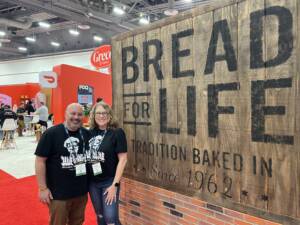
That visibility mattered more than either of us wanted to admit.
Because whether he could articulate it or not, watching me build something else made it harder to believe I could still hold his future.
That wasn’t his failure.
And it wasn’t mine.
It was timing.
But it was also clarity.
There was something else happening, too. Something I didn’t recognize right away.
After COVID, I lost the motivation to fight as hard as I once did to be hired.
Not because I couldn’t.
Because I didn’t want to in the same way.
The energy it took to chase meetings, to stay visible, to keep myself positioned for someone else’s approval suddenly felt disproportionate. The cost was clearer. The return less guaranteed. And the urgency I once summoned on command just wasn’t there anymore.
COVID didn’t end my ambition.
It changed what I was willing to spend it on.
While I was baking, while I was building something tangible, I started to see how much energy I had once poured into convincing other people I was worth choosing. How much of my drive had been tied to proximity to permission.
Once you feel what it’s like to put that energy into something you control, it’s hard to go back.
That shift wasn’t dramatic. It didn’t feel like a decision.
It felt like gravity doing its work.
Bread entered my life without ceremony. No announcement. No grand plan. Just something real in a world that had become abstract. You put your hands in it. You wait. You see results. Or you don’t.
There were no notes.
No executives.
No meetings about meetings.
Just flour, water, time, and accountability.
When television stopped choosing me, and when that final client quietly stepped away, it forced a question I had been avoiding:
If no one is watching, what do I actually want to spend my days doing?
That question doesn’t arrive with confidence. It arrives with fear. With ego bruised. With uncertainty about how the story will sound when you eventually have to explain it to someone else.
Especially later in life, when society quietly suggests you should already be settled.
We praise reinvention, but only when it’s clean.
Only when it looks intentional.
Only when it succeeds quickly enough to rewrite the narrative.
What we don’t talk about is the long middle. The overlap. The grief for the identity you didn’t choose to leave behind but still had to bury.
I didn’t fail out of television.
I aged out of a version of myself.
There’s something else worth saying.
I never say never.
Because the truth is, I didn’t lose my skills when television loosened its hold on me. I didn’t forget how to build stories. How to see structure. How to shape a narrative. How to take something messy and make it coherent.
I’m still a television producer.
What changed wasn’t my ability.
It was the terms.
For a long time, my identity was tethered to being hired. To being selected. To waiting for someone else to say yes before I was allowed to make something.
Now I’m producing a documentary about my second act. Not as a comeback. Not as nostalgia. But as authorship.
On my terms.
Bread didn’t replace television. It expanded me. It reminded me that I don’t have to collapse my identity into a single lane to be legitimate. I can make food. I can build businesses. I can tell stories. I can still produce.
My identity isn’t tied to one thing anymore.
And that might be the real reinvention.
I never left television.
I changed the terms.
If this is your kind of thing, I post essays like this every Monday morning. If you or someone you know would want them dropped into yours, you can sign up here.
Sign Up